Convert images
without the guesswork
Pick a conversion and the tool opens ready for it. 16 paths across JPG, PNG, WebP, AVIF and HEIC. Each one shows the size result measured, not promised.
- Free, no signup
- We keep nothing
- Metadata stripped
Drop images or browse
JPEG · PNG · WEBP · AVIF · HEIC · max 30 MB
Advanced settings
Auto tunes each image.
A hard cap for “under 50 KB” portals.
Empty side keeps the ratio. Never enlarges.
Which format should you convert to? Decided by subject, with receipts
Not one of the big converter sites answers this question. They list formats and leave you to guess. The rule that covers 90% of cases: photographs → AVIF for the web or JPG for everything else; screenshots → WebP; logos and flat art → AVIF or WebP (never JPG if they're transparent); anything you'll edit next → PNG. The table below is that advice run through our actual engine on three real subjects. It is the same engine that will process your files.
Real files, every format: photo, screenshot and logo, measured
| Subject | Source | JPG | PNG | WebP | AVIF |
|---|---|---|---|---|---|
| Photograph | 188.3 KB (JPEG) | 74.7 KB | n/a (grows) | 110.9 KB | 78.7 KB |
| UI screenshot | 2683.7 KB (PNG) | 111.3 KB | 394.8 KB | 83.8 KB | 62.5 KB |
| Flat-colour art | 7.4 KB (PNG) | 2.9 KB | 1.6 KB | 1.3 KB | 0.8 KB |
Auto quality throughout. Two patterns worth noticing: AVIF beats WebP in every row, and on the photo, Auto JPEG edged them both. That is why we measure instead of assuming.
How these numbers are measured: every byte count on this page is the size of the actual encoded file our engine produced from the named source image. Those are the same bytes you would download, not an estimate or a best case. Rerun any of them yourself: drop your own file into the tool above and the meter reports your real result.
Compatibility: the real reason people convert at all
Nearly every conversion on this page exists because some program refuses some format. The 2026 state of play in one paragraph: JPG and PNG open everywhere, full stop. Thirty years of software guarantees it. WebP is universal in browsers (~97%) but still stumbles in Office, older Photoshop, many email clients and some marketplace uploaders. That is the top reason people convert out of it. AVIF renders in ~95% of browsers but has thinner editor support, so serve it with a fallback. HEIC is the outlier. iPhones shoot it, yet only ~a fifth of browsers (Safari alone) and almost no Windows software opens it unaided. That makes HEIC-to-anything the most-needed conversion family on this page. When something won't open, the fix is one conversion toward the older format. Each pair card below goes to a page that covers its specific case.
Convert and hit a size limit in one pass
The signature move the two-tool sites can't match: set Max file size in Advanced settings and the conversion lands under it in the same pass. The engine binary-searches quality to the best fit, never overshoots, and ships presets at 50/100/200 KB and 1 MB. "Convert this PNG to JPG under 100 KB for the portal" stops being convert-here-then-compress-there. It works for every output format on this page, and the compress pages run the same caps when the format already suits.
The four conversion gotchas, answered before they bite
Transparency into JPG: JPEG has no alpha, so transparent pixels flatten onto white here, matching what every mainstream editor does. Keep transparency by exiting to WebP or AVIF instead. Sideways photos: phone cameras store rotation as EXIF metadata; we honour it before encoding, so the output faces the way the photo was taken. Washed-out colour: stripping metadata (our privacy default) also removes colour profiles, which can slightly mute a wide-gamut Display-P3 photo. Tick Keep EXIF to retain the profile when exact colour matters. Animated files: we decline them with a clear message rather than silently flattening to frame one. An animation that quietly loses its animation is a data-loss bug, not a conversion.
What we deliberately don't convert
- Camera RAW (CR2, NEF, ARW…)? RAW deserves a real developer, not a web converter's defaults: Lightroom, darktable, or your camera vendor's tool. Export to JPEG there, then optimise here.
- PSD, AI, SVG? Layered and vector sources belong in their editors; rasterising them is a design decision, not a conversion. Export a PNG at the size you need, then convert that.
- Video-adjacent formats (GIF animations)? Animation is video's job in 2026. We convert stills honestly instead of flattening your animation to one frame.
Five formats, every direction, done properly, instead of a 500-format list where each pair gets a template. The 16 pairs and 5 hubs below are each their own page with their own measured numbers.
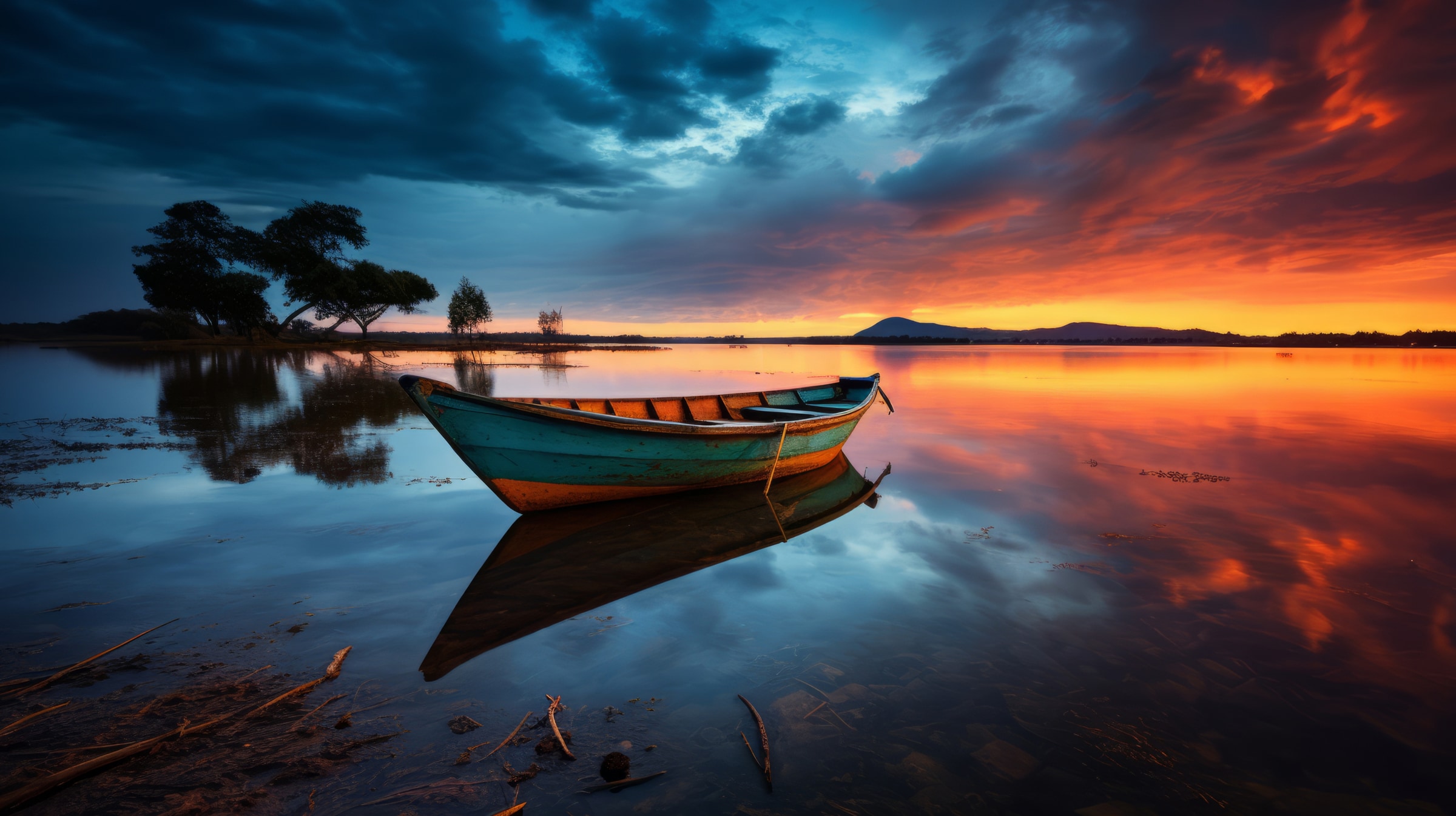 Original · 9.4 MB
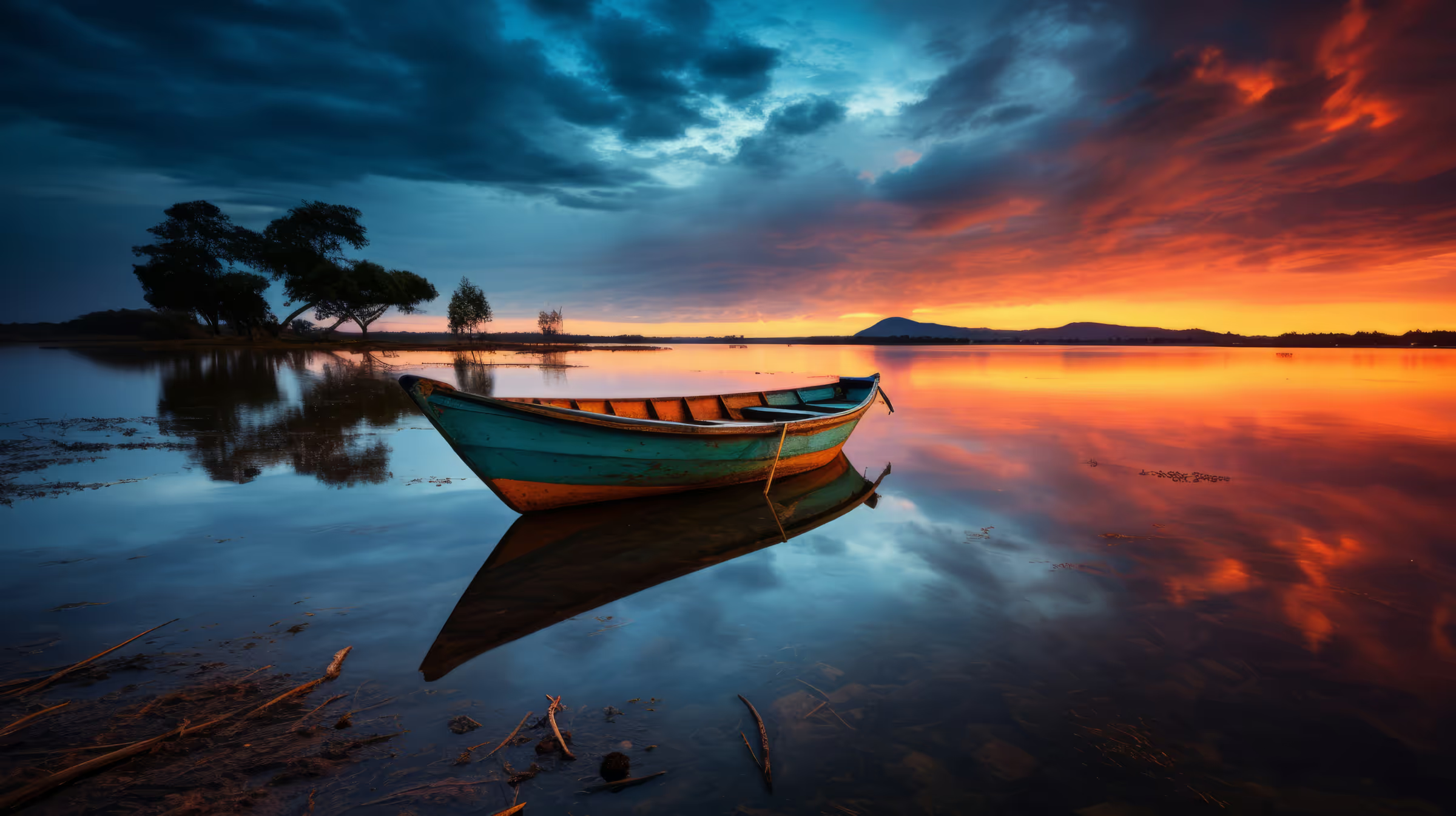 AVIF · 67 KB
Every conversion in one place
16 format pairs plus a converter hub for each format. Every card is its own page, and we measure every result.
- JPG converter
Everything in and out of JPG, the compatibility format, on one page.
- PNG converter
Convert to PNG when pixels must not change, or out of it when size matters.
- WebP converter
The safe modern default: smaller than JPG, supported almost everywhere.
- AVIF converter
The smallest files we can make. Every path in and out of AVIF.
- HEIC converter
Turn iPhone photos into files everything can open.
- +90%JPG to PNG
Freeze the current pixels. Lossless from here, and the right move before editing or archiving.
- −32%JPG to WebP
The safe upgrade. Around a third smaller at matching quality, and readable essentially everywhere.
- Pick−58%JPG to AVIF
Roughly half the bytes of WebP on most photos. Slower to encode, worth it at scale.
- −47%PNG to JPG
For photographic PNGs that never needed transparency. We flatten any alpha onto a solid background.
- Pick−64%PNG to WebP
Keeps the alpha channel and still cuts real weight. The least disruptive way off PNG.
- −78%PNG to AVIF
Transparency survives and size collapses. Check thin type and 1px strokes in the preview first.
- +47%WebP to JPG
The universal handoff. Anything that opens an image opens this: print, email, old software.
- +179%WebP to PNG
Keeps transparency for editors and pipelines that won't read WebP. Bigger file, no further loss.
- Pick−38%WebP to AVIF
One more step down the size curve for pages already on modern formats. Keep WebP as the fallback.
- Pick+138%AVIF to JPG
When something rejects the upload, this is the format it wants. Photos only, no transparency.
- +352%AVIF to PNG
Keeps alpha and gives every editor something to open. Expect a large file. That's the trade.
- +62%AVIF to WebP
Broader support, still modern compression. The middle path when AVIF is one step too far.
- Pick+82%HEIC to JPG
The default answer. Email it, print it, upload it anywhere. Orientation carries over.
- +245%HEIC to PNG
For screenshots and graphics saved as HEIC, or anything headed into a design tool untouched.
- +24%HEIC to WebP
Phone photos headed for a website. Similar size to the original, and universally displayable.
- −24%HEIC to AVIF
Both are HEIF-family codecs, so quality holds up while the file lands smaller than the original.
- Image to PDF
Drop up to 50 images. They come back as one combined PDF, each page compressed first.
Formats at a glance
If you only remember one row: AVIF for the web, JPG for compatibility, PNG when nothing may change.
- PNG190%
- JPG100%
- WebP68%
- AVIF42%
Indexed to JPG. Typical for photographs at matched quality. Flat art and screenshots behave differently, and PNG does far better there than this suggests.
| Format | Compression | Alpha | Relative size | Best for |
|---|---|---|---|---|
| JPG | Lossy | No | 100% | Photographs |
| PNG | Lossless | Yes | 190% | Graphics, screenshots, transparency |
| WebP | Lossy or lossless | Yes | 68% | Smaller web images |
| AVIF | Lossy or lossless | Yes | 42% | Smallest web images |
| HEIC | Lossy (HEVC) | Yes | 55% | iPhone photos (convert for the web) |
How it works
Three steps, no account, and a measured number at the end of each one.
Drop the files in
Up to 50 images at once. Each one travels over HTTPS, and nothing stays longer than it takes to process.
Compare, then decide
Every output reports its real size against the original, with a zoomable before/after view.
Download one or all
Grab results individually or as a single ZIP. We strip metadata by default and we keep nothing: files are wiped automatically.
Up to 50 at a time · 30 MB per file
Questions people actually ask
Short answers first. If one of these is your situation, you will find the matching conversion linked above.
- What is the best image format for the web in 2026?
- AVIF first, WebP fallback. Measured on our reference photo: 78.7 KB as AVIF and 110.9 KB as WebP against a 188.3 KB JPEG source, at ~95% and ~97% browser support respectively. JPG remains the interchange format for everything that is not a browser.
- WebP or AVIF: which should I use?
- AVIF is smaller on every subject we measure. Our screenshot encoded to 62.5 KB as AVIF vs 83.8 KB as WebP. The professional answer is both in a picture element: AVIF source first, WebP fallback. Forced to pick one? WebP buys ~2 extra points of reach, AVIF buys fewer bytes.
- How do I convert an image without losing quality?
- Set quality to 100 and convert to PNG. That pins a truecolour, bit-exact copy of the decoded image, transparency included. At Auto, PNG output is palette-optimised instead: far smaller, and visually clean for graphics. Lossy exits (JPG, WebP, AVIF) trade exactness for bytes. The compare slider on every result is the referee.
- Can I convert multiple images at once for free?
- Yes: fifty per batch, 30 MB each, mixed input formats in one drop, and one ZIP out with filenames preserved. Free, no signup, no watermark. The free allowance is 300 images a day (100 an hour), counted live beside the tool. That is more anonymous volume than the big server-side tools publish, and it resets daily.
- Will converting PNG to JPG remove the transparent background?
- It flattens it. JPEG has no alpha channel, so transparent pixels become a colour. Here that colour is white, the fill every mainstream tool uses. Transparency that must survive should exit to WebP or AVIF instead. Both carry full alpha at a fraction of PNG's size.
- How do I convert iPhone HEIC photos in bulk?
- Drop up to 50 straight off the phone. No plugins, no desktop app, and outputs as JPG, PNG, WebP or AVIF. HEIC is the format Windows and most non-Safari browsers can't open. The HEIC converter hub covers every direction, including the measured size story nobody else publishes.
- Which image format has the smallest file size?
- Content decides, which is why we measure. AVIF beats WebP on every subject we test: screenshot 62.5 vs 83.8 KB, flat art 0.8 vs 1.3 KB. On our reference photo, though, Auto JPEG (74.7 KB) actually edged Auto AVIF (78.7 KB). The tool shows your file's real numbers per format.
- Is there a file size limit or a daily conversion limit?
- Yes, and we publish them plainly, since almost nobody else does: 50 files per batch, 30 MB per file, and 300 free images a day (100 an hour). No queue. Free is ad-supported; paid tiers are ad-free. We count the allowance live beside the tool, so you always know where you stand. No surprise walls mid-batch.
- Does converting remove EXIF and GPS data?
- Yes, by default. Every output ships without EXIF or GPS, so a published photo stops carrying where it was taken. Photographers who need the metadata keep it with one checkbox in Advanced settings. No competitor page states its metadata behaviour at all.
- Do I need to install software or create an account?
- Neither. Everything runs in the browser against our servers. There is nothing to install, no account required, no email, and the download is direct with no sign-in wall at the end. The same engine also powers an API for automation. An account lifts your limits rather than gating the basics.
- Why does my converted image look rotated or washed out?
- Rotation first: phone cameras store it as EXIF, and we honour it before encoding, so outputs come out upright. Washed out: metadata stripping removes colour profiles too, which can slightly mute a wide-gamut (Display-P3) photo. Tick Keep EXIF in Advanced settings to retain the profile and the exact look.
- Can I convert and compress to a target size in one step?
- Yes. Set Max file size in Advanced settings and the output format meets it in the same pass, quality-searched and never overshot. "Convert to WebP under 100 KB" is one drop here. Everywhere else it is two tools and two uploads.
- Is it safe to upload my photos to an online converter?
- Ours does not hold on to them: we process and wipe files automatically, and we keep nothing, never archive, never train on or reuse your images. We strip metadata from outputs by default. No account means there is no profile to attach files to in the first place.
Start with the file you already have
Drop it in and we’ll pick the conversion that saves the most without breaking anything.
Convert now